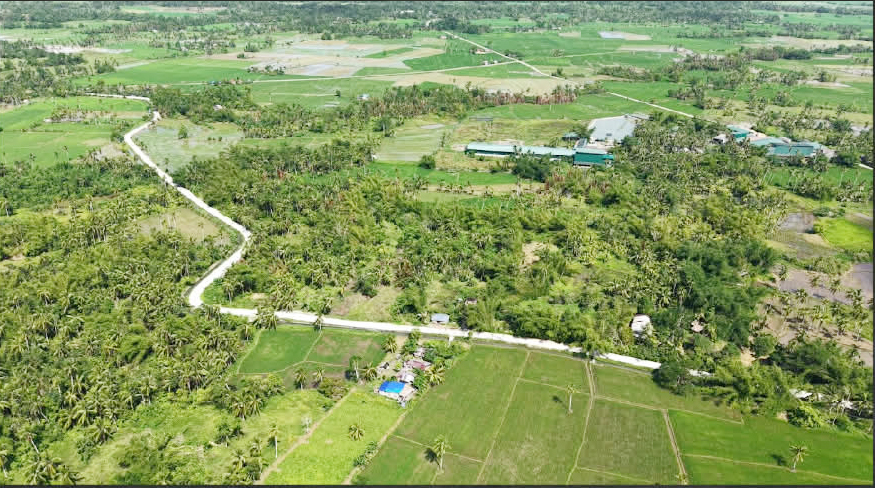
TACLOBAN CITY — Residents of Barangay A. Bonifacio-Camansi in Mayorga, Leyte are now enjoying safer and more convenient travel following the completion of a P19.5-million road concreting project implemented by the Department of Public Works and Highways (DPWH) Leyte 2nd District Engineering Office.
District Engineer Leo Edward Oppura said the project involved the construction of a 0.20-meter-thick Portland Cement Concrete Pavement (PCCP) covering a total of 2.8418 lane kilometers. The project also included the installation of reinforced concrete pipe culverts (RCPC), a reinforced concrete box culvert (RCBC) with wing walls, and 363.35 cubic meters of stone masonry, all aimed at improving road safety and long-term durability.
Barangay Councilor Roseida Bastante said the newly completed road has significantly improved daily mobility in the community, particularly for students and farmers.
She recalled that before the project, the road was rough and muddy, forcing residents to take longer routes through other barangays. Students, in particular, had to travel farther distances to reach school, often arriving late due to the poor road conditions.
Bastante added that the situation worsened during heavy rains, as the low-lying road would easily flood and become completely impassable. This not only disrupted daily travel but also delayed the transport and delivery of local products to markets.
With the road now fully concreted and elevated, Bastante said travel has become more comfortable and reliable, even during rainy weather. She noted that children can now safely use the road and residents no longer worry about flooding or prolonged detours.
She expressed her gratitude to the DPWH for implementing the project, saying it has greatly improved accessibility and quality of life in the barangay.
The project was funded under the Calendar Year 2025 General Appropriations Act (GAA) and implemented by Fairchild Builders & Developers, Inc. DPWH said the road is expected to enhance mobility and ensure safer, more convenient travel for residents, especially students and farmers transporting goods.
(LIZBETH ANN A. ABELLA)