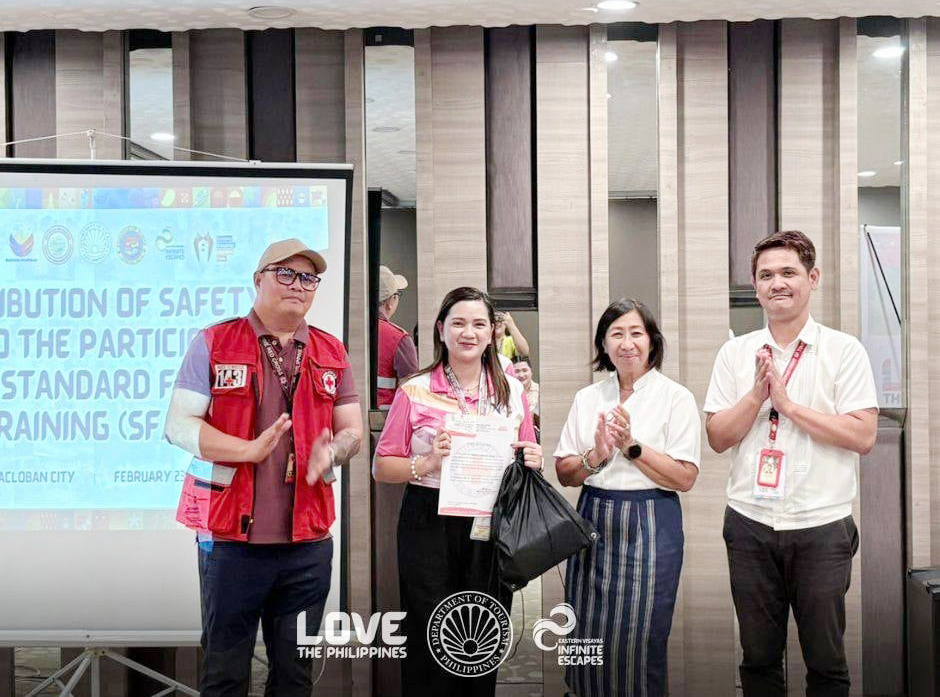
TACLOBAN CITY — In a bid to strengthen safety standards across tourism sites in Leyte, the regional office of the Department of Tourism (DOT-8) has distributed emergency safety kits to trained tourism frontliners, reinforcing efforts to make destinations in Eastern Visayas more prepared for medical emergencies.
The turnover ceremony was held on February 23, 2026, benefiting 25 graduates who completed the Standard First Aid and Basic Life Support–Cardiopulmonary Resuscitation (CPR) with Automated External Defibrillator (AED) training conducted in December 2025. The recipients represented various tourism establishments across Leyte province.
They were joined by business owners and establishment representatives, bringing total attendance during the activity to 45 participants.
According to DOT-8, the safety kits are intended to help trained personnel immediately apply their life-saving skills within their workplaces, ensuring faster response during accidents or health-related incidents involving guests and staff.
The initiative highlights the growing emphasis on safety and resilience in the tourism sector, especially as visitor arrivals continue to rebound and destinations aim to meet higher standards of preparedness.
The activity was led by DOT-8 Regional Director Karina Tiopes, in partnership with the Philippine Red Cross, represented by Chapter Service Representative Byron Apostol, a volunteer instructor, and the chapter’s focal person for Fund Generation Services.
Aside from distributing safety kits, the Red Cross team also introduced the Safe Card accidental insurance program, encouraging tourism stakeholders to invest in additional risk protection mechanisms.
For Donna Fe Abogado Batan of Viaje Holidays, one of the beneficiaries, the training and equipment provided a sense of empowerment.
“Through this training, I gained confidence, courage, and readiness to act when lives depend on it,” Abogado said.
DOT-8 emphasized that the initiative forms part of its continuing capacity-building program aimed at professionalizing the tourism workforce in Eastern Visayas.
By equipping frontliners with practical skills and essential tools, the agency hopes to enhance visitor safety, protect businesses from potential liabilities, and promote the region as a secure and responsible travel destination.
Officials said strengthening emergency preparedness at the establishment level is a crucial step toward building resilient tourism communities capable of responding effectively to unforeseen incidents.
(ROEL T. AMAZONA)