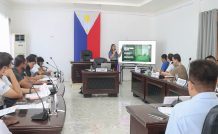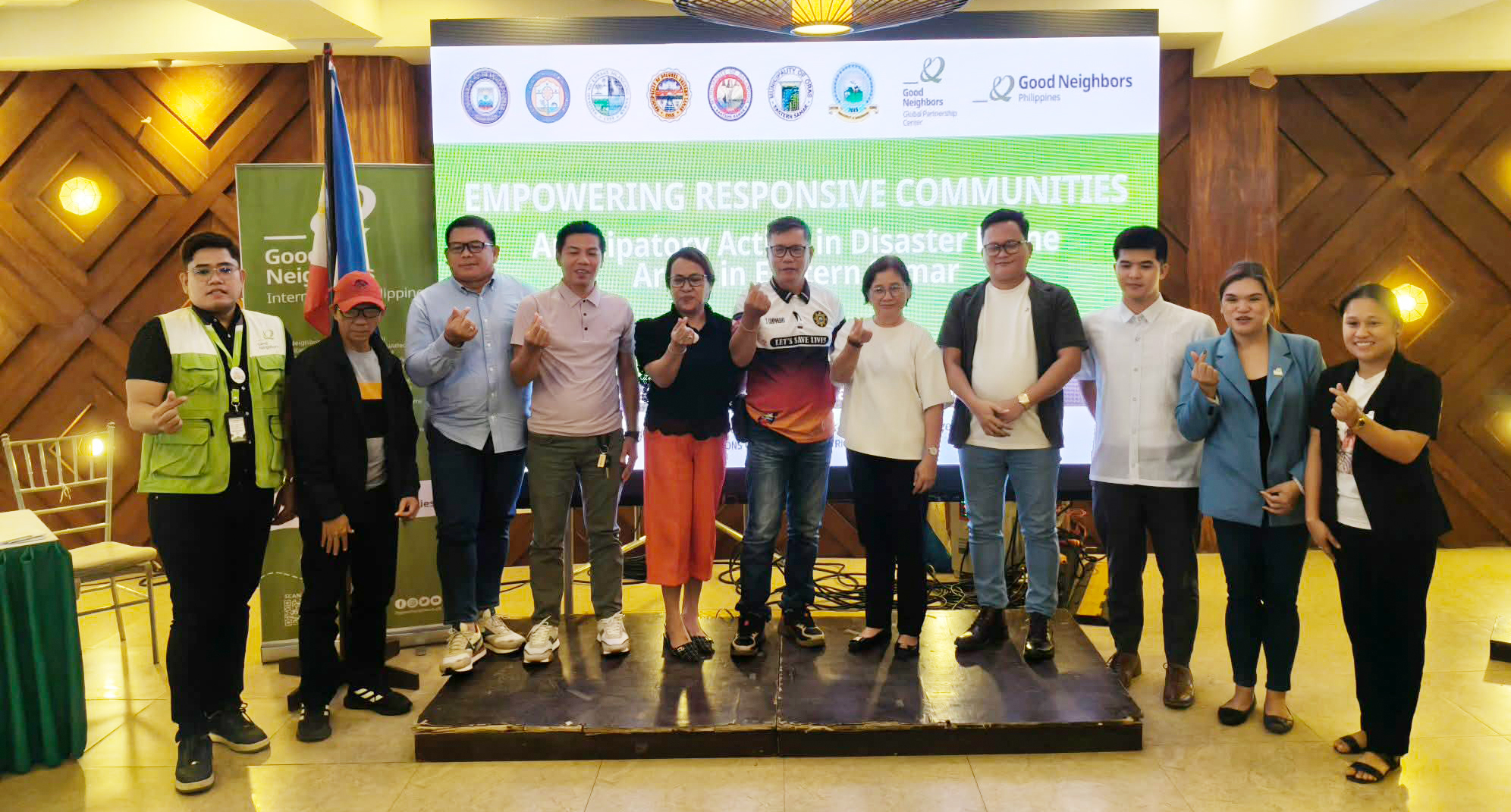
TACLOBAN CITY — With Eastern Samar’s eastern seaboard frequently battered by strong typhoons, a new community-centered disaster initiative has been rolled out to help local governments act before calamities strike.
Good Neighbors Philippines has launched an anticipatory action program in six high-risk municipalities—Salcedo, Balangiga, Quinapondan, Lawaan, Dolores, and Oras—to strengthen preparedness and protect the most vulnerable sectors.
The initiative, formally introduced following a tripartite memorandum of agreement signed on November 13, 2024, aims to shift disaster response from reactive to preventive by equipping communities and local governments with early warning triggers and pre-disaster interventions.
According to Beverly Simon, disaster risk reduction focal officer of Good Neighbors Philippines, the program seeks to empower local governments to act swiftly once hazard indicators are detected. Priority support will be directed to vulnerable groups, including pregnant women, children, the elderly, persons with disabilities, and survivors of gender-based violence.
Key components of the anticipatory action project include strengthened coordination among the six municipalities; baseline assessments and vulnerability mapping; integration of anticipatory action strategies into local DRRM plans; community preparedness orientations; training of community response teams; improved communication systems; and disaster drills and capacity-building on anticipatory mechanisms.
Salcedo Mayor Melchor Melgar emphasized the critical role of early response in saving lives and reducing financial strain on local governments. He noted that anticipatory action minimizes the costs associated with reactive emergency measures.
“Early actions or preparedness are very important for a local government. It’s very economical if we do early response,” Melgar said.
In Salcedo, one of the proactive measures already in place is preemptive cash transfer, where vulnerable households receive early financial assistance facilitated by partner organizations and donors.
To fully maximize anticipatory action, Good Neighbors Philippines and Eastern Samar local officials expressed hope that the implementing rules and regulations for Republic Act 12287, the Declaration of State of Imminent Disaster Act, will soon be finalized. The law would allow LGUs to utilize calamity funds even before a disaster occurs—an essential step toward proactive, life-saving interventions.
(ROEL T. AMAZONA)